







Pterygoid dental implants provide an alternative approach when bone loss in the posterior upper jaw limits the placement of conventional dental implants. Instead of relying entirely on weakened or resorbed bone in the posterior maxilla, these implants extend into dense bone in the pterygoid region to provide additional support for a fixed dental restoration.
For appropriately selected patients, this approach may reduce the need for extensive bone grafting or sinus lift surgery while providing stable posterior support. Pterygoid implants may be used alone or as part of a more comprehensive full-arch treatment plan involving conventional, zygomatic, or other advanced implant techniques.
At the Los Angeles Center for Oral and Maxillofacial Surgery (LACOMS), treatment begins with a detailed evaluation of each patient’s anatomy, available bone, overall health, and restorative needs to determine the most appropriate approach for complex dental implant reconstruction.
If you’ve been told you do not have enough bone for conventional dental implants, contact our office to learn whether pterygoid implants, zygomatic implants, or another advanced implant treatment may be appropriate for you. Our oral and maxillofacial surgeons will evaluate your anatomy and develop a treatment plan based on your individual needs.
What Are Pterygoid Dental Implants?

Pterygoid implants are specialized dental implants designed to obtain support from dense bone located behind the upper jaw. They are particularly useful when bone loss in the posterior maxilla makes conventional implant placement difficult or would otherwise require additional procedures to create sufficient bone.
Unlike standard implants placed primarily within the tooth-bearing portion of the jaw, pterygoid implants extend through the posterior maxillary region toward deeper cortical bone. This allows the surgeon to use existing anatomy for support rather than rebuilding significant portions of lost posterior bone.
Where Are Pterygoid Implants Placed?
Pterygoid implants are placed in the far posterior region of the upper jaw. Their path begins around the maxillary tuberosity and extends toward the pterygomaxillary region, where several dense bone structures meet.
Because this area is located behind the maxillary sinus, it can provide an alternative source of posterior anchorage when conventional implant sites have inadequate bone.
The Pterygoid Plate and Posterior Maxilla
The posterior maxilla can be challenging for dental implant placement because bone quantity and density may be limited and the maxillary sinus occupies part of the available space. The pterygoid plates, which extend from the sphenoid bone, are part of a region of dense cortical bone that can provide additional anchorage for pterygoid implant placement beyond these compromised areas.
This anatomy allows pterygoid implants to provide posterior support for partial- or full-arch restorations without depending entirely on the remaining upper-jaw bone.
Why Pterygoid Implants Are Used for an Atrophic Posterior Maxilla
Long-term tooth loss can cause the bone of the upper jaw to gradually decrease in volume. In the posterior region, this loss of bone can be compounded by the position and size of the maxillary sinus, leaving inadequate bone for conventional implant placement.
Pterygoid implants offer another potential treatment path by using available bone farther behind the upper jaw rather than requiring the compromised posterior maxilla to provide all of the implant support.
Severe Bone Loss and the Atrophic Maxilla
An atrophic maxilla refers to an upper jaw that has experienced substantial bone loss. Patients with advanced atrophy may have been told they require extensive bone augmentation before receiving implants or that conventional implants are not possible.
Pterygoid implants do not automatically eliminate the need for grafting in every patient, but they can provide an alternative source of support when posterior bone is insufficient. Candidacy depends on individual anatomy and comprehensive surgical planning.
How Pterygoid Implants Differ From Conventional Dental Implants
Conventional dental implants generally rely on adequate bone at or near the location of the missing teeth. When significant bone has been lost in the posterior upper jaw, additional procedures such as bone grafting or sinus elevation may be considered before conventional implants can be placed.
Pterygoid implants take a different approach. Their angled trajectory allows them to engage dense cortical bone in the pterygomaxillary region, providing posterior anchorage without relying exclusively on the deficient bone beneath the sinus.
Benefits of Pterygoid Implants
The primary benefit of pterygoid implants is their ability to create posterior implant support in cases where the available upper-jaw bone presents significant limitations.
For the right patient, this can expand the possibilities for fixed dental restoration while potentially reducing the need for additional preparatory surgery.
Avoiding Extensive Bone Grafting
Patients with substantial posterior bone loss may otherwise require bone grafting or a sinus lift procedure to create sufficient bone for conventional implant placement. Grafting can add additional surgical procedures and healing time before the final restoration can be completed.
By using existing dense bone in the pterygoid region, pterygoid implants may reduce or eliminate the need for extensive grafting in appropriately selected cases.
Posterior Support Without a Sinus Lift
A sinus lift increases the amount of bone available beneath the maxillary sinus so conventional implants can be supported in the posterior upper jaw.
Because pterygoid implants obtain anchorage farther posteriorly, some patients may be able to avoid sinus augmentation altogether. This can simplify the overall treatment sequence and potentially shorten treatment time when additional grafting and healing procedures are not required.
Immediate Loading and Fixed Teeth
Pterygoid implants can contribute to the stability needed for a fixed implant-supported restoration. In some full-arch cases, sufficient primary implant stability may allow immediate loading, meaning a temporary fixed restoration can be attached without waiting several months before receiving teeth.
Immediate loading is not appropriate for every patient. The decision depends on implant stability, anatomy, bone quality, the overall implant configuration, and the patient’s individualized treatment plan.
Zygomatic and Pterygoid Implants
Zygomatic and pterygoid implants both provide alternative anchorage when severe upper-jaw bone loss limits conventional implant placement, but they use different anatomical structures.
Zygomatic implants obtain support from the cheekbone, or zygoma. Pterygoid implants are positioned farther posteriorly and engage the pterygomaxillary region. The appropriate technique depends on where bone has been lost and where stable anchorage can safely be achieved.
When Zygomatic and Pterygoid Implants May Be Used Together
In advanced full-arch reconstruction, pterygoid and zygomatic implants may complement one another. Zygomatic implants can provide support in areas of severe maxillary deficiency, while pterygoid implants can contribute additional posterior support.
They may also be combined with conventional or other implant types when the patient’s anatomy permits. The configuration is determined through detailed imaging and individualized surgical and restorative planning.

PLAY VIDEO
YVONNE’S DENTAL IMPLANTS EXPERIENCE
Who Is a Candidate for Pterygoid Dental Implants?
Pterygoid implants may be considered for patients with significant posterior upper-jaw bone loss, severe maxillary atrophy, long-term tooth loss, or inadequate bone beneath the maxillary sinus. They may also be worth exploring for patients facing extensive bone grafting or sinus augmentation procedures before conventional implant treatment.
However, severe bone loss alone does not determine candidacy. Overall health, anatomy, available anchorage, mouth opening, restorative goals, and other clinical factors must be evaluated before treatment. The American College of Prosthodontists also identifies specific anatomical limitations that can make pterygoid placement inappropriate.
Planning Pterygoid Implant Placement
Successful treatment begins with understanding the patient’s three-dimensional anatomy and determining whether adequate bone is available along a safe implant trajectory.
Planning also considers how the pterygoid implants will work with other implants to support the final restoration.
3D CBCT Imaging and Surgical Planning
Cone beam computed tomography (CBCT) provides a three-dimensional view of the posterior maxilla, pterygoid region, maxillary sinus, and surrounding anatomical structures.
This imaging helps the surgeon evaluate available bone and determine implant position, length, and angulation before surgery. Because of the complex anatomy and posterior location involved, detailed surgical planning is particularly important for pterygoid implant placement.
Placement of Pterygoid Implants
During placement, the implant follows an angled path from the posterior upper jaw toward the dense bone of the pterygomaxillary region. Depending on the patient’s anatomy and treatment plan, pterygoid implants may be placed at an angle of approximately 45 degrees or greater to engage this region and achieve stable posterior anchorage.
Pterygoid implants are typically longer than many conventional dental implants, with the appropriate length determined by the patient’s anatomy and the amount of bone available for stable anchorage.
The technique requires precise knowledge of the surrounding anatomy because of the implant’s angulation and proximity to important anatomical structures.
What to Expect During Pterygoid Implant Surgery
The exact surgical process varies according to the patient’s treatment plan and whether pterygoid implants are being placed alone or as part of a larger full-arch reconstruction.
Treatment is performed with appropriate anesthesia, and implant insertion is guided by the preoperative surgical plan. When adequate implant stability is achieved, a temporary fixed restoration may sometimes be attached as part of an immediate-loading protocol.
Recovery After Pterygoid Implant Surgery
Recovery varies depending on the extent of surgery and the number and types of implants placed. Patients can generally expect postoperative swelling, tenderness, and temporary dietary modifications while the surgical sites begin healing.
The implants then undergo osseointegration, the biological process through which bone integrates with the implant surface. Follow-up appointments allow the surgical team to monitor healing and determine when the patient is ready to progress toward the final restoration.
Experience Matters in Advanced Implant Dentistry
Pterygoid implant placement is technique-sensitive and involves complex anatomy in a difficult-to-access area of the posterior upper jaw. Published systematic reviews have reported pterygoid implant survival rates above 90%, including a 92.5% cumulative survival rate at 10 years. The American College of Prosthodontists specifically identifies understanding of the surgical anatomy and management of potential surgical and prosthodontic complications as important considerations for clinicians performing this treatment.
For patients considering advanced implant reconstruction, evaluation by an experienced oral and maxillofacial surgical team provides the opportunity to compare pterygoid implants with conventional implants, zygomatic implants, bone grafting, sinus augmentation, and other appropriate options based on individual anatomy.
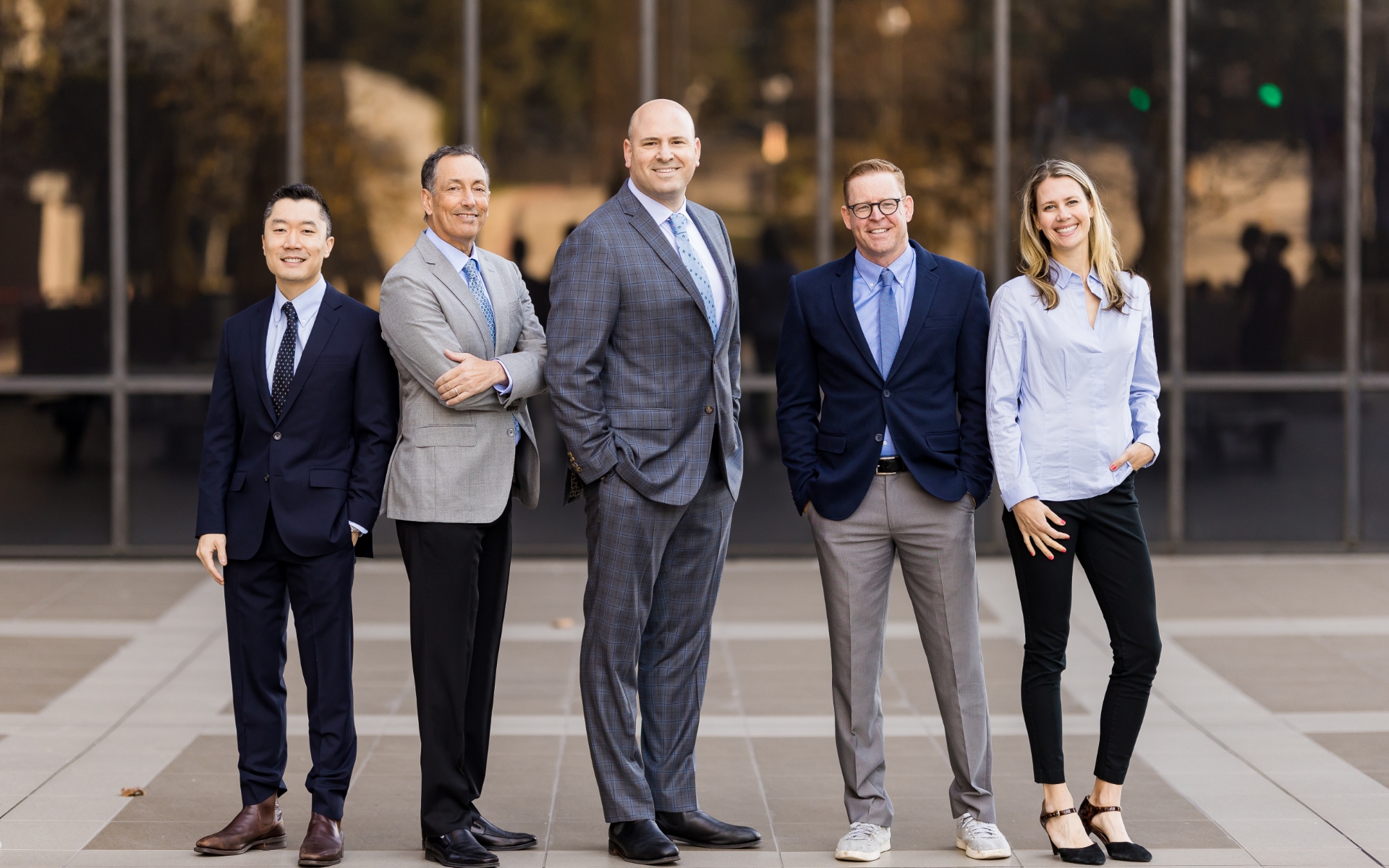
Meet Your Team of Board-Certified Oral Surgeons

Why Choose LACOMS for Pterygoid Dental Implants?
Our Team of Oral & Maxillofacial Surgeons
Pterygoid implant placement requires advanced knowledge of maxillofacial anatomy and experience treating patients with complex bone loss. At the Los Angeles Center for Oral and Maxillofacial Surgery, our board-certified oral and maxillofacial surgeons specialize in advanced dental implant and reconstructive procedures, including cases where conventional implant treatment may not be possible.
Advanced Imaging and Surgical Planning
Our surgeons use 3D imaging and detailed surgical planning to evaluate the available bone, maxillary sinus, pterygoid region, and surrounding anatomical structures before treatment. This allows us to determine whether pterygoid implants, zygomatic implants, conventional implants, bone grafting, or a combination of techniques provides the most appropriate approach for each patient.
Advanced Care for Complex Implant Cases
LACOMS provides full-scope oral and maxillofacial surgical care for patients throughout Los Angeles and Southern California. Our surgeons routinely evaluate complex dental implant cases and develop individualized treatment plans based on each patient’s anatomy, restorative needs, and goals.
Frequently Asked Questions About Pterygoid Dental Implants
How Long Do Pterygoid Implants Last?
Pterygoid implants are intended to provide long-term support, but no implant can be guaranteed to last for a specific period. Available research supports pterygoid implants as an established treatment option, although long-term data extending beyond ten years is comparatively limited.
Long-term implant health also depends on factors such as oral hygiene, overall health, restorative design, maintenance, and regular professional follow-up.
Can Pterygoid Implants Be Loaded Immediately?
Potentially. Immediate loading may be possible when sufficient implant stability is achieved, and the overall treatment design supports it. Published literature has documented immediate function with implants in the pterygoid region, but whether this approach is appropriate must be determined individually.
How Many Implants Are Placed?
There is no universal number of implants required. The number and combination of implants placed depend on the amount and location of available bone, whether the patient requires a partial- or full-arch restoration, and the overall restorative design.
Pterygoid implants may be combined with conventional, zygomatic, or other advanced implant techniques to create an appropriate foundation for the planned restoration.
Are There Any Risks With Pterygoid Implant Surgery?
Like any oral surgery, there are potential risks associated with pterygoid implant placement. Because these implants are placed in a complex area of the posterior upper jaw, careful imaging, treatment planning, and precise surgical placement are especially important. Your surgeon will review the risks, benefits, and alternatives with you before treatment and determine whether pterygoid implants are appropriate for your anatomy.
How Much Do Pterygoid Dental Implants Cost?
The cost of pterygoid implant treatment varies depending on the number and type of implants required, the final restoration, and whether additional procedures or other implant techniques are included in your treatment plan. Following your consultation, our team will review the recommended treatment and discuss the associated costs and financial arrangements with you.
Pterygoid Dental Implants in Los Angeles & Southern California
Patients with severe upper-jaw bone loss may require advanced implant techniques that are not part of routine dental implant treatment. At the Los Angeles Center for Oral and Maxillofacial Surgery, our surgeons evaluate patients with complex implant needs from throughout Los Angeles, Southern California, and beyond.
Our practice provides full-scope oral and maxillofacial surgical care supported by advanced imaging, surgical planning, and treatment options for patients with complex dental implant needs.
At LACOMS, advanced imaging and individualized surgical planning are used to determine which implant approach best fits your anatomy and restorative goals. To learn whether pterygoid dental implants or another advanced implant treatment may be appropriate for you, contact our Los Angeles office to schedule a consultation.